
The Prelate's Spotlight
This spotlight is designed to encourage, educate, and inspire Sir Knights who are discerning a deeper role in the spiritual life of Commandery. By sharing lessons learned, meaningful moments of ministry, and practical guidance for success, these interviews preserve the wisdom and lived experiences of those who have faithfully served both Christ and the Order.
Each installment seeks to strengthen the spiritual foundation of Commandery by emphasizing faith, leadership, service, and the continuing importance of the Office of the Prelate in modern Templary.
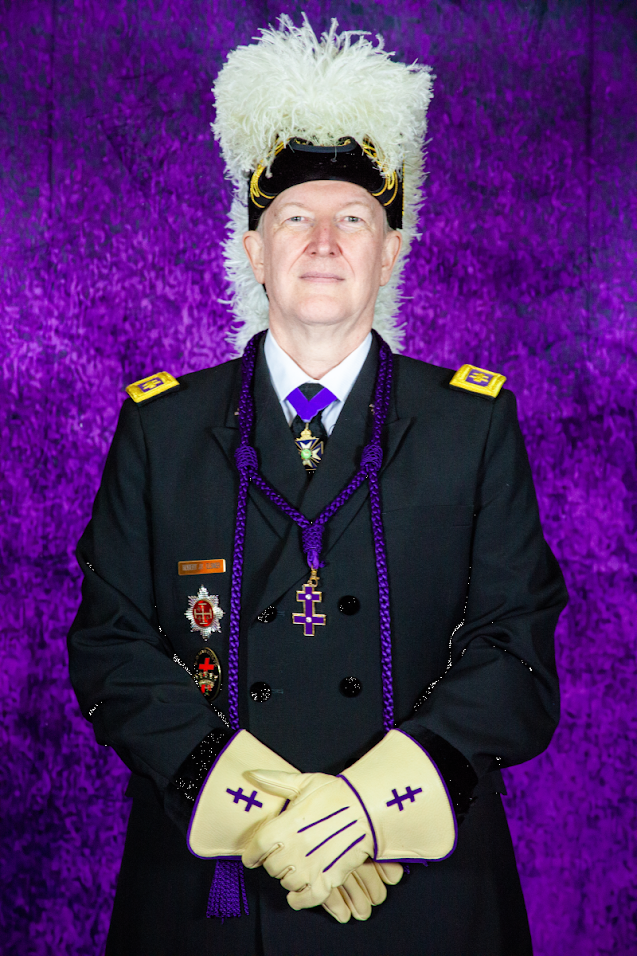
Sir Knight Robert Elsner
Associate Grand Prelate - Grand Encampment of Knights Templar
1. What first called you to serve as a Prelate or Grand Prelate, and what has that office taught you about spiritual leadership?
Spiritual leadership is servant leadership. As a colleague of mine says, “Everyone loves servant leadership until it is time to serve.”
When I first served as Prelate, it was simply part of progressing through the line in my local Commandery. After serving as Commander, however, I realized that although I had helped improve the Commandery financially and increase membership, I had not significantly contributed to the spiritual growth of the Sir Knights. As a seminary professor, that realization troubled me deeply.
I began putting small plans into place to serve more intentionally and listened carefully to those who had previously attempted similar goals. During my year as Grand Commander, I wrote Bible Study for Freemasons, a work explaining many of the biblical passages used in Blue Lodge, Commandery, and other Masonic bodies. It was a way to use my gifts in an area where there was a genuine need.
That, ultimately, is the key to spiritual leadership: discovering the skills, abilities, and spiritual gifts you possess and offering them in service to others.
2. How would you explain the purpose of the Prelate’s office to a Sir Knight who sees it as only a ceremonial role?
I love language, so I often begin with the meaning of the word itself. Prelate comes from the Latin roots prae, meaning “before,” and lātus, meaning “borne” or “carried.” Religious leaders came to be called prelates because they were carried before others in religious processions.
What is often forgotten is that it was not the individual who mattered most, but what they carried: the Holy Bible.
In the Order of the Temple, for example, one of the Prelate’s most important responsibilities is reading Scripture and helping teach the lessons found within it. If that role is viewed as “only ceremonial,” then we must also ask what place the Holy Bible itself holds in the life of someone seeking membership in the Christian arm of Masonry.
3. What has been the most meaningful or formative experience you have had while serving as Prelate?
The most meaningful experiences have come from hearing brothers who had lost hope and were contemplating suicide, and then later learning that simply being present with them helped save their lives.
The only thing that has meant more was hearing from a Prelate I had trained who later gave a suicide prevention talk at a DeMolay meeting. Afterward, a young man approached him and shared that he had intended to take his own life that evening but was now reconsidering.
4. How has serving as Prelate changed the way you understand faith, service, brotherhood, and leadership?
Faith is often discussed in abstract terms. Serving as a Prelate taught me that faith must be integrated into every decision and every day of life.
Earlier in my Masonic journey, I sometimes became frustrated when significant work in Lodge or Commandery went unnoticed. Over time, I learned that service is not about recognition. Thanks belong to God.
I strive to serve my brothers both in visible ways and in ways they may never see. Leadership means leading by example without expectation of praise or reward.
5. What do you believe Sir Knights need most from their Prelate in today’s Commandery setting?
Sir Knights need someone who is genuinely present with them, even when the Prelate does not have every answer.
Simply being there for a brother can often be enough.
6. What qualities do you believe every successful Prelate should develop?
A successful Prelate must develop the ability to listen in order to understand, rather than merely listening to formulate a reply.
Too often, people listen only long enough to redirect the conversation back toward themselves. Effective spiritual leadership requires asking thoughtful questions, remaining attentive, and recognizing that leadership is not about personal attention, but about equipping others to serve well.
7. What is one challenge you faced as a Prelate, and how did that experience shape your approach to the office?
One challenge I encountered was working alongside individuals who had become discouraged by past failures. Some had good ideas that were simply ahead of their time, yet their disappointments caused them to resist nearly every new proposal with the familiar phrase: “We already tried that, and it didn’t work.”
That experience taught me the importance of honoring the ideas and efforts of those who came before us while still encouraging innovation and growth. Again, I learned that the work is not about personal credit, but about successful service.
8. How can a Prelate offer spiritual guidance while remaining humble, approachable, and respectful of each Sir Knight’s personal journey?
I try to offer guidance grounded more in Scripture than in my personal experiences. There are times when sharing lived experiences is appropriate, but those moments should be the exception rather than the rule.
I have been richly blessed, and I give God the credit for those blessings. When we help others understand that their relationship with God will not look exactly like ours, it allows them to see us not as competitors for comparison, but as allies in faith.
9. What role should the Prelate play in supporting the Commander and strengthening the overall health of the Commandery?
Scripture reminds us that “a house divided against itself cannot stand” (Matthew 12:25; Mark 3:25; Luke 11:17).
The Prelate serves God by supporting the Commander, not by attempting to replace him. The office exists to work alongside the Commander in ensuring that the spiritual lives of the Sir Knights are nurtured and not neglected.
10. How can a Prelate help keep the Christian foundation of Knights Templar Masonry meaningful and active rather than merely historical or symbolic?
Recently, after conferring the Orders of the Commandery, I gave the new Sir Knights an assignment: read Psalm 115 in its entirety. After explaining why its opening line appears on our banner, I reminded them that the sword we wield is ultimately the sword of faith—a burden too heavy for the arm alone, but one that can only be carried by a pure heart seeking Christ.
I also strive to avoid hypocrisy as much as possible. A life that says, “Do as I say, not as I do,” undermines the integrity of the Gospel itself.
11. What practices, habits, or disciplines help you prepare spiritually before giving a prayer, reflection, or message?
In 1 Kings 19:11–13, Elijah sought God through dramatic displays of wind, earthquake, and fire, yet God ultimately spoke in a still, quiet whisper.
Before offering prayer or reflection, I try to set aside the distractions and noise of daily life so I can listen for that quiet voice of God. My goal is to speak truthfully—not merely to offer my own opinions.
12. What do you feel Prelates need most in order to be successful: mentorship, education, ritual knowledge, confidence, pastoral sensitivity, or something else?
Prelates must be willing to study Scripture humbly and accept the possibility that their interpretation may be incorrect.
The Bible itself is never wrong, but human understanding often is. Because of that, we should always err on the side of grace and mercy.
13. How can Grand Commanderies and local Commanderies better support, train, and encourage those serving in the Office of the Prelate?
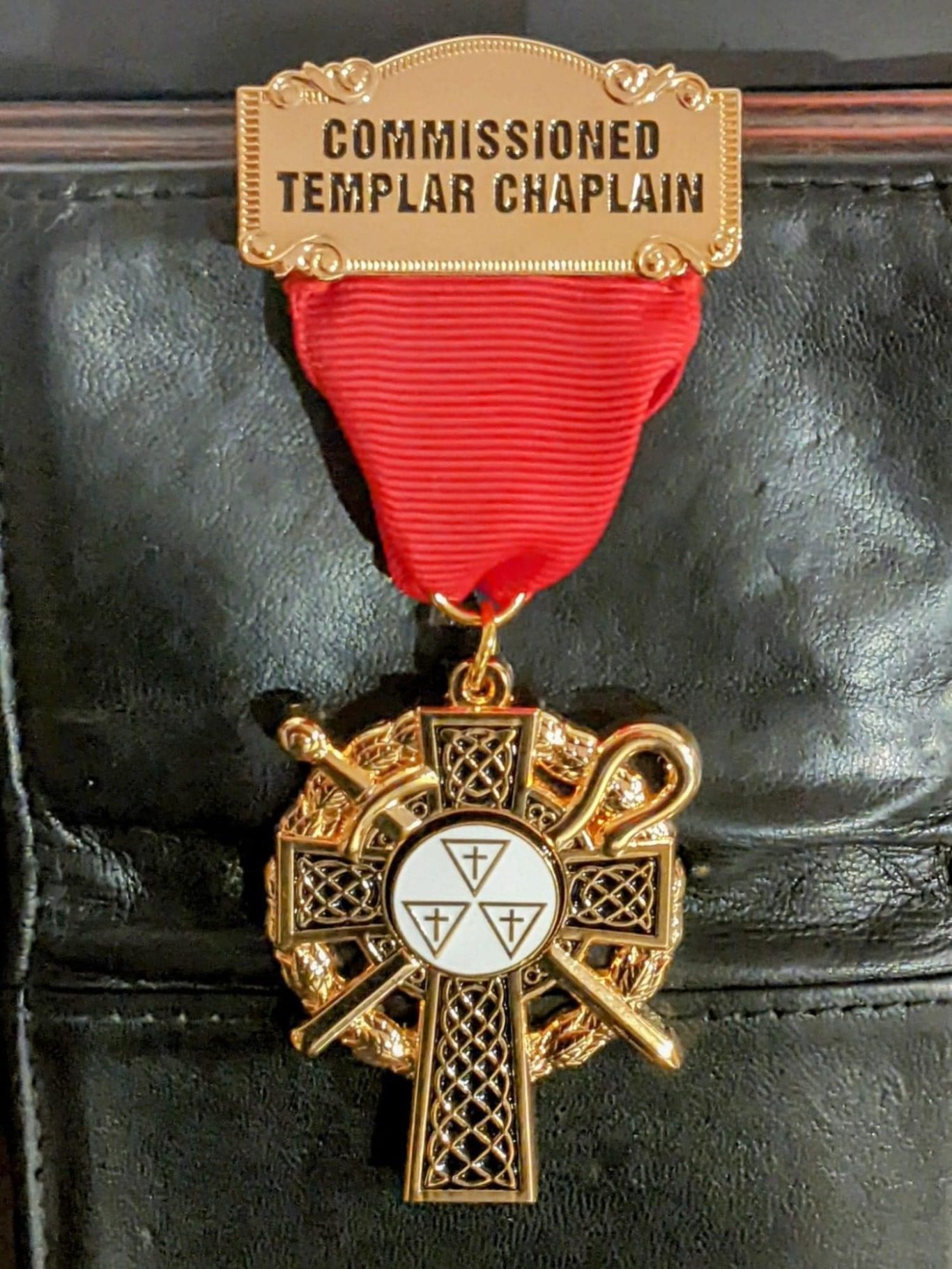
The Commissioned Templar Chaplain Program was specifically designed for the development of Prelates and Chaplains. The program is available through Templared Educational Foundation and consists of a 12-unit self-paced course open to anyone interested in strengthening their service in this area.
14. What advice would you give to a newly appointed Prelate who feels uncertain, unprepared, or unsure of how to make the office meaningful?
Trust that the brethren would not have entrusted you with the office if they did not believe you were capable of fulfilling its responsibilities.
Growth and change may be necessary in order to serve effectively, but often that is precisely why someone is placed into the role—to help them grow into the leader they are meant to become.
15. When people look back on your service as Prelate or Grand Prelate, what do you hope they will remember about your ministry, leadership, and example?
I hope they would say that I “acted justly, loved mercy, and walked humbly with God” (Micah 6:8).